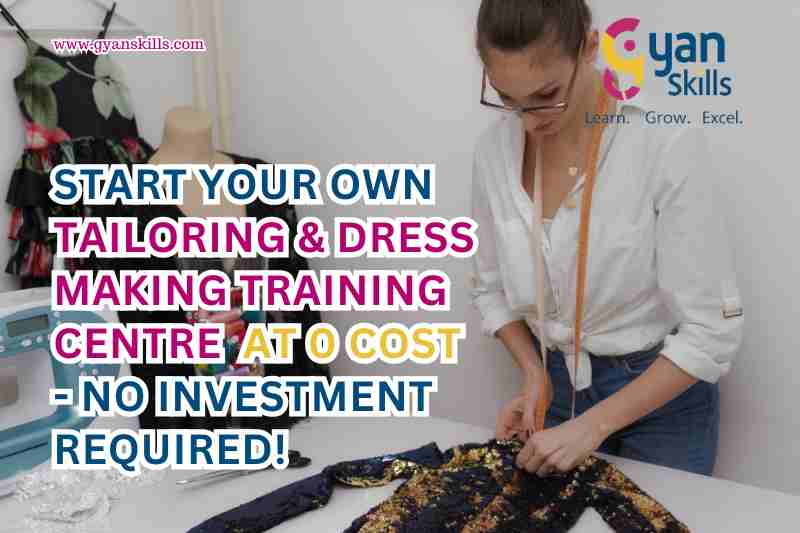
START YOUR OWN TAILORING & DRESS MAKING TRAINING CENTRE AT 0 COST – NO INVESTMENT REQUIRED!
Updated for 2026
Start Your Own Tailoring Training Centre in 2026: Complete Franchise & Business Guide
Want to start a Tailoring Training Centre, Tailoring Institute or Fashion Designing Training Centre? If you already have tailoring knowledge, teaching experience or an interest in skill development, a structured training-centre model can help you turn that knowledge into a local education business.
The opportunity is bigger than simply teaching students how to use a sewing machine. A modern tailoring course can cover basic stitching, dress making, pattern making, fashion designing, garment alteration, cutting, measurements, finishing and small-business skills.
This updated 2026 guide explains how to start a tailoring training centre, what students actually want to learn, which courses you can offer, what equipment you need, how long courses can take, how certification works, how to market your centre and what you should check before choosing a franchise.
2026 industry update:
Tailoring remains closely connected with self-employment and small-business activity in India.
Recent analysis estimates that India had nearly 12 million custom tailors in 2024,
with women making up around 72% of custom tailors. The same research highlights that formal
vocational training is still uncommon in the sector. That gap creates a continuing need for
practical, accessible skill training.
Interested in Starting a Tailoring Training Centre?
Get information about the franchise model, available courses, centre support and the current partner process.
What Is a Tailoring Training Centre?
A Tailoring Training Centre is a skill-development institute where students learn practical garment-making skills. Depending on the course, students may learn sewing-machine operation, measurements, cutting, stitching, pattern making, dress making, alterations and basic fashion designing.
For many learners, the goal is not simply to receive a certificate. They want to be able to make clothes independently, alter garments for customers, work in a boutique, support an existing tailoring business or eventually start a small tailoring shop of their own.
That is why practical training matters. A good course should give students enough hands-on practice to move from watching demonstrations to actually making garments.
Why Is Tailoring Training Still Relevant in 2026?
Tailoring may be a traditional skill, but the business around it continues to evolve. Custom clothing, alterations, boutique work and small-scale garment businesses all depend on people who can turn fabric into properly fitted garments.
Recent data shows just how large the activity is. Research published in 2026 estimates that India had nearly 12 million custom tailors in 2024, making custom tailoring one of the country’s largest manufacturing employment activities. It also found that the number of custom tailors had grown substantially over the previous two decades.
At the same time, formal training remains limited. More than 80% of custom tailors in the cited analysis had not received vocational training. That does not mean every tailor needs a certificate, but it does show why accessible skill-development programmes can matter.
The big opportunity in 2026:
Do not position your institute as a place that only teaches “silai.”
Build a practical programme around tailoring + dress making + pattern making +
alterations + fashion basics + entrepreneurship.
What Are Students Asking About Tailoring Courses Right Now?
Recent sewing-community discussions show that beginners often have very practical questions. For example, learners ask where to start with a sewing machine, whether a beginner course should focus on actually making clothes, how to improve sewing skills after learning the basics, and how to handle patterns and construction techniques.
These are useful questions for a training-centre owner because they tell you what students expect from a course.
- Can I learn tailoring if I have never used a sewing machine?
- How long does it take to learn basic stitching?
- Should I learn sewing before fashion designing?
- Will I learn how to cut and stitch complete garments?
- Do tailoring courses teach pattern making?
- Can I learn blouse, kurti, salwar and other garment construction?
- Can I start a tailoring business after the course?
- Is a certificate useful when applying for jobs?
- Which sewing machine should a beginner learn on?
- How much practical training should a tailoring course include?
A strong institute should answer these questions before the student even asks them.
Tailoring Training and the 2026 Skill-Development Trend
Tailoring is also appearing within wider Indian skill-development programmes. The Government’s current skill-development ecosystem includes apparel-related training, while Jan Shikshan Sansthan programmes include locally relevant courses such as tailoring, embroidery and handicrafts.
The government reported that PMKVY 4.0 had trained 28.17 lakh candidates across 36 sectors and 36 States/UTs and 738 districts as of June 30, 2026. The same update highlighted the growing emphasis on demand-driven and technology-enabled skill development.
For a private training centre, the lesson is simple: students increasingly expect structured courses, practical skills, assessment and credible documentation, rather than informal demonstrations alone.
What Courses Can a Tailoring Training Centre Offer?
| Course | What Students Can Learn |
|---|---|
| Basic Tailoring Course | Basic stitching, machine operation, measurements, fabric handling and simple garment construction. |
| Dress Making Course | Cutting, stitching and finishing different types of garments. |
| Pattern Making | Basic pattern development, measurements, cutting layouts and garment fitting. |
| Fashion Designing Basics | Introduction to fashion concepts, garment design, colour, fabrics and design development. |
| Clothing Alteration | Practical alteration and fitting techniques for existing garments. |
| Advanced Tailoring | More complex garment construction, finishing and fitting techniques. |
| Embroidery & Decorative Work | Optional embellishment and value-addition skills where suitable. |
| Tailoring Entrepreneurship | Basic customer handling, pricing, order management, marketing and small-business planning. |
Who Should Open a Tailoring Training Centre?
- Tailoring Professionals: Experienced tailors who want to teach their skills to the next generation.
- Fashion Designers: Designers who want to add practical training and garment construction to their work.
- Teachers: Educators interested in vocational and practical skill development.
- Existing Training-Centre Owners: Computer or vocational institutes that want to add tailoring and fashion courses.
- Boutique Owners: People who already work with garments and want to develop a training wing.
- Entrepreneurs: Individuals interested in starting a local skill-development business.
- Women Entrepreneurs: People interested in building a training and livelihood-focused centre around tailoring.
Why Tailoring Can Be a Strong Women-Focused Skill Programme
Tailoring has a particularly strong connection with women’s livelihood and entrepreneurship programmes in India.
Government information on the STEP programme, for example, specifically lists tailoring, stitching and embroidery among the skills that can be supported for women’s employability and self-employment.
Recent research also shows that women make up a large majority of India’s custom tailoring workforce. This makes tailoring training especially relevant for programmes focused on women’s entrepreneurship and local livelihood opportunities.
A training centre can therefore consider flexible batches, local-language instruction, beginner-friendly classes and entrepreneurship modules alongside technical tailoring skills.
What Should Students Learn in a Good Tailoring Course?
A student should leave the course with more than theoretical knowledge.
A practical curriculum can include:
- Sewing-machine operation
- Threading and basic machine maintenance
- Fabric identification and handling
- Body measurements
- Marking and cutting
- Basic stitching techniques
- Seam finishing
- Garment fitting
- Pattern-making fundamentals
- Dress construction
- Clothing alterations
- Basic fashion-design concepts
- Customer measurements and order handling
- Pricing and basic business management
How to Start Your Own Tailoring Training Centre
| Step | What to Do |
|---|---|
| 1. Study Local Demand | Find out whether students, women entrepreneurs, school leavers, boutique workers and job seekers are looking for tailoring courses in your area. |
| 2. Decide Your Course Portfolio | Choose beginner tailoring, dress making, fashion designing, pattern making, alteration and other relevant programmes. |
| 3. Compare Training Models | Decide whether you want to operate independently or use a franchise/partner model. |
| 4. Verify Franchise Terms | Confirm current fees, registration charges, certification, support and centre requirements before signing anything. |
| 5. Choose a Location | Look for areas close to residential communities, schools, colleges, markets, boutiques and other high-footfall locations. |
| 6. Arrange Equipment | Set up sewing machines, cutting tables, chairs, irons, measuring tools, mannequins and other required equipment. |
| 7. Prepare Trainers | Make sure instructors can demonstrate techniques and provide enough individual practice. |
| 8. Start Student Batches | Offer beginner-friendly batches and clearly communicate course duration, curriculum and assessment. |
| 9. Build Your Local Brand | Use Google Business Profile, local SEO, WhatsApp, social media, referrals and community outreach. |
| 10. Track Student Outcomes | Record attendance, practical assignments, completed garments and course assessments. |
Want to Start Your Own Tailoring Training Centre?
Speak with the partner team and ask about the current 2026 franchise structure, courses, certification and support.
What Infrastructure Is Required for a Tailoring Institute?
A tailoring institute does not need an extremely complicated setup, but students need enough equipment and workspace to practise properly.
Basic Equipment Checklist
- Sewing machines
- Cutting tables
- Chairs and workstations
- Measuring tapes
- Fabric scissors
- Marking tools
- Rulers and pattern-making tools
- Irons and ironing boards
- Mannequins where required
- Sample garments
- Pattern papers
- Thread, needles and basic sewing accessories
- Good lighting and ventilation
How Many Sewing Machines Do You Need?
There is no single number that works for every institute. Your requirement depends on your batch size, class schedule and whether every student will receive hands-on machine practice during each session.
For a practical training centre, avoid building a business model where students spend most of the class watching because there are not enough machines.
Small batches with sufficient practice time can often produce a better learning experience than very large batches with limited equipment.
How Long Does a Tailoring Course Take?
The original training-centre material states that tailoring and dress-making courses generally range from 3 to 6 months, depending on course depth and complexity.
The actual learning time can vary considerably. A beginner learning basic stitching has different needs from someone studying pattern making, advanced garment construction or fashion designing.
For this reason, your website should avoid promising that every student will become a professional tailor within a fixed number of days.
Can Beginners Learn Tailoring Without Previous Experience?
Absolutely.
A beginner does not need to know advanced stitching before joining a basic tailoring course. A sensible curriculum starts with machine familiarity, simple seams and measurements and then gradually moves towards complete garments.
Recent sewing-community questions show exactly this kind of beginner demand: people ask how to learn a sewing machine, where to start, what projects to practise and whether they should focus on sewing skills before moving further into fashion design.
Should You Learn Tailoring Before Fashion Designing?
For many beginners, learning basic garment construction first is extremely useful.
A fashion-design student who understands fabric, measurements, cutting, stitching and fitting has a stronger practical understanding of how an idea becomes an actual garment.
This does not mean you must become an expert tailor before studying fashion design. It simply means that practical construction skills can make design concepts easier to understand.
Tailoring vs Fashion Designing: What Is the Difference?
| Tailoring | Fashion Designing |
|---|---|
| Focuses strongly on garment construction. | Focuses on design concepts and garment development. |
| Measurements and fitting are central. | Design, colour, silhouette and concept are important. |
| Cutting and stitching are core skills. | Sketching, design development and styling may be included. |
| Often directly connected to alteration and customer orders. | Can extend into design studios, brands, boutiques and fashion businesses. |
| Can be suitable for starting a local tailoring business. | Can lead toward broader fashion and apparel career pathways. |
Can Students Start a Tailoring Business After Training?
Yes, tailoring skills can be used as the foundation for a small business. The National Qualification Register describes the Self Employed Tailor role as involving measurements, fabric cutting, sewing and garment alterations, with a progression pathway towards self-employed tailoring entrepreneurship.
Possible business models include:
- Home-based tailoring
- Neighbourhood tailoring shop
- Boutique
- Alteration service
- Custom blouse and dress-making service
- Uniform stitching
- Small garment-production unit
- Tailoring and training centre
How Can a Tailoring Institute Help Students Become Entrepreneurs?
Technical training is only one part of the journey. If your institute wants to be genuinely career-focused, consider adding basic entrepreneurship.
- How to calculate garment costs
- How to price stitching services
- How to take customer measurements
- How to maintain order records
- How to communicate with customers
- How to photograph finished garments
- How to promote a boutique on social media
- How to use WhatsApp for customer orders
- How to manage fabric and accessory costs
- How to build repeat customers
Is a Tailoring Certificate Enough to Get a Job?
No certificate can honestly guarantee employment.
A certificate can document that a student completed a particular training programme, but employers and customers also care about actual ability.
A strong tailoring student should ideally finish the course with practical work that demonstrates what they can make.
For a training centre, this means a portfolio can be just as valuable as a certificate: finished garments, patterns, alterations and other practical projects can show real ability.
What Does the Gyan Skills Franchise Offer?
The current Gyan Skills franchise information describes a broader skill-development franchise model rather than a tailoring-only platform. It promotes access to 300+ courses, online and offline verification and support for skill-development centres.
The original tailoring-centre material specifically describes courses around basic stitching, pattern making, fashion designing basics and clothing alterations, along with course material, expert assistance, online/offline learning resources, brand support and certification.
The exact tailoring course list, certification arrangements and commercial terms should be confirmed directly before joining.
Does “Zero Cost” Mean the Tailoring Centre Has No Expenses?
Important clarification:
“Zero cost” or “₹0 franchise fee” should not automatically be understood as
“you will spend nothing to operate a physical training centre.”
A physical institute can still have expenses such as:
- Rent or premises costs
- Sewing machines
- Furniture
- Electricity
- Internet
- Teaching materials
- Fabric and practice materials
- Trainer salaries or payments
- Maintenance
- Local marketing
The current Gyan Skills franchise information promotes a franchise model with no franchise fee, while its broader franchise platform describes centre-partner support and other services. Always confirm the current commercial terms in writing before making a business commitment.
How Can a Tailoring Training Centre Get Students in 2026?
1. Target Local SEO
Create pages targeting searches such as:
- Tailoring institute near me
- Tailoring classes in [city]
- Tailoring course in [city]
- Fashion designing course in [city]
- Dress making course in [city]
- Sewing classes in [city]
- Tailoring training centre in [city]
- Best tailoring institute in [city]
- Women tailoring classes in [city]
2. Show Actual Student Work
Photographs of finished garments, practical classes and student projects can answer questions that a long sales page cannot.
3. Offer Beginner Counselling
Many students are nervous about joining because they have never operated a sewing machine. A short counselling session can make the course feel much more approachable.
4. Use WhatsApp Marketing
Create simple WhatsApp campaigns around new batches, weekend classes, beginner courses, fashion-design workshops and alteration training.
5. Build Local Partnerships
Consider partnerships with boutiques, women’s groups, community organisations, schools, colleges and other local skill-development organisations.
Start Your Tailoring Training Centre
Take the next step and ask the franchise team about the latest course portfolio, centre requirements, certification and partner support.
Frequently Asked Questions About Tailoring Training Centres
1. What is a Tailoring Training Centre?
A Tailoring Training Centre is a practical skill-development institute where students learn sewing, stitching, measurements, cutting, garment construction, alterations and, depending on the programme, fashion-design basics.
2. Is tailoring still a good skill to learn in 2026?
Yes. Tailoring remains relevant for custom clothing, alterations, boutiques, small garment businesses and self-employment. Recent Indian data also shows that custom tailoring remains a major source of manufacturing employment.
3. Can beginners join a tailoring course?
Yes. Beginners can start with sewing-machine operation, basic stitching, measurements and simple garment construction before moving into advanced techniques.
4. Do I need previous sewing experience?
No previous experience is generally necessary for a beginner-level course. The course should start from the basics and progressively introduce more difficult techniques.
5. How long does a tailoring course take?
The original franchise material states that Tailoring and Dress Making courses generally range from 3 to 6 months depending on their complexity and depth.
6. What is taught in a basic tailoring course?
A basic course can include sewing-machine operation, measurements, fabric handling, cutting, stitching, seams, finishing and simple garment construction.
7. Is pattern making included in tailoring courses?
It can be. Pattern making is specifically listed among the courses in the original Tailoring Training Centre programme.
8. Is fashion designing the same as tailoring?
No. Tailoring focuses heavily on construction, measurements, cutting, stitching and fitting. Fashion designing covers a wider area including design concepts, styling, colour, silhouette and garment development. The two skills complement each other.
9. Should I learn tailoring before fashion designing?
For many beginners, basic garment construction is useful before moving deeper into fashion design because it helps them understand how designs become real garments.
10. Can I learn tailoring from home?
Yes, basic tailoring can be learned at home, but structured classroom training can provide demonstrations, direct feedback, access to equipment and a more organised curriculum.
11. Can I start a tailoring business after the course?
Yes. Students can potentially use tailoring skills for home-based work, alteration services, a tailoring shop, boutique work, custom garment orders or other small-business models.
12. Can tailoring become a self-employment opportunity?
Yes. The National Qualification Register includes a Self Employed Tailor occupational qualification and identifies self-employed tailoring entrepreneurship as a progression pathway.
13. What equipment is needed for a tailoring training centre?
Typical equipment includes sewing machines, cutting tables, scissors, measuring tools, rulers, pattern-making supplies, irons, ironing boards, sample garments and appropriate workstations.
14. How many sewing machines are required?
There is no fixed number for every institute. The requirement depends on batch size, class timings and how much individual machine practice students need.
15. Can women join tailoring courses?
Yes. Tailoring is widely used in women’s skill-development and entrepreneurship programmes. Women also represent a large share of India’s custom tailoring workforce.
16. Can men join tailoring courses?
Yes. Tailoring and garment construction are open to anyone interested in developing the skill or pursuing related employment and business opportunities.
17. Can I learn clothing alterations separately?
Yes. Clothing alterations can be offered as a dedicated short course or as a module within a broader tailoring programme.
18. Can a tailoring centre teach embroidery?
Yes. Embroidery and related decorative skills can complement tailoring and fashion-design programmes, depending on your centre’s curriculum.
19. Is a tailoring certificate useful?
A certificate can document completion of a training programme, but students should also develop genuine practical ability. A portfolio of completed garments can strengthen their profile.
20. Are QR-verified certificates available?
The original franchise material states that students can receive QR code-verified certificates. The exact certificate and verification process should be confirmed with the franchise provider before enrolment.
21. Can certificates be verified online?
The franchise material states that online and offline verification options are available. Confirm the current verification system and applicable certificate terms before promoting specific claims to students.
22. Is a tailoring certificate enough to get a job?
No. A certificate does not guarantee employment. Practical skill, garment-construction ability, experience, portfolio quality and the requirements of the employer or customer all matter.
23. Can I start a tailoring institute without being a fashion designer?
The original programme states that no special qualification is required to open the centre if the person has knowledge of tailoring and fashion design. If you personally teach advanced subjects, however, you should have appropriate practical knowledge or work with capable trainers.
24. Can I run a tailoring training centre part-time?
The original franchise material states that a tailoring training centre can be run part-time or full-time, subject to your schedule and the applicable centre requirements.
25. How are tailoring course fees decided?
Course fees can depend on local demand, course duration, trainer expertise, equipment, materials and the depth of practical training. The original franchise material states that support can be provided for preparing the fee structure.
26. Is a tailoring franchise better than starting independently?
It depends on your situation. A franchise can provide a structured curriculum, branding, student systems and support, while an independent centre gives you more control. Compare the actual costs, support and obligations before deciding.
27. What support can a tailoring franchise provide?
The original programme describes course content, training materials, expert assistance, online and offline class resources, brand support, promotion and certification-related services.
28. Does the franchise provide marketing support?
The original material states that continuous support can include marketing and promotion. Ask the provider what marketing support is currently included rather than assuming that all advertising will be handled for you.
29. Is the Tailoring Training Centre franchise really zero cost?
The original article markets the opportunity as “0 cost” or requiring no upfront investment. However, a physical centre can still have operating expenses such as equipment, premises, electricity, materials and trainers. Confirm exactly which franchise charges are zero and which operating costs remain your responsibility.
30. What is the best tailoring course for beginners?
A beginner-friendly course should start with sewing-machine operation, basic stitching, measurements, cutting and simple garments before progressing into pattern making, alterations and advanced dress making.
31. What is the best tailoring course for starting a boutique?
A broader programme covering garment construction, measurements, pattern making, fitting, alterations, finishing and basic fashion design can be more useful than a course focused only on basic stitching.
32. Can tailoring training include entrepreneurship?
Yes. A modern course can include pricing, customer handling, order management, marketing, social media promotion and basic business planning.
33. Can tailoring training help women become entrepreneurs?
Yes. Tailoring is already closely connected with self-employment and women-led livelihood activity in India. Training can combine technical sewing skills with basic entrepreneurship to make the programme more practical.
34. What should I check before joining a tailoring institute?
Check the trainer’s practical experience, number of sewing machines, batch size, hands-on practice, course curriculum, duration, certificate details, total fees, materials included and whether the institute provides real garment-making practice.
35. What should I check before buying a tailoring franchise?
Ask for the current franchise agreement, all fees and charges, certification details, course list, training support, marketing support, renewal terms, student-registration process and your responsibilities for infrastructure and operations.
36. How can I apply for a Tailoring Training Centre franchise?
You can use the official partner page to submit your details and discuss the current franchise process, available courses and centre requirements.
Ready to Start Your Tailoring Training Centre?
Build your centre around practical skills, hands-on learning and real career possibilities. Talk to the franchise team to understand the latest 2026 terms before making a decision.
Final Thoughts: Is a Tailoring Training Centre a Good Business Idea in 2026?
Tailoring is no longer just about teaching someone how to stitch a straight line. A well-designed training centre can teach students how to measure, cut, construct, fit, alter and eventually create garments independently.
The current Indian skill-development environment also continues to place emphasis on vocational training, apparel skills and entrepreneurship. At the same time, custom tailoring remains a large employment activity, while formal training is still limited.
That combination makes Tailoring Training Centre, Tailoring Institute, Dress Making Course and Fashion Designing Training useful search and business topics for 2026.
If you are a tailor, fashion professional, teacher, boutique owner or entrepreneur, a structured training-centre model may be worth exploring.
But the most important thing is to keep the promise realistic: students should receive genuine practical training, and centre owners should understand all costs and obligations before joining a franchise.
Have Questions Before Applying?
Speak directly with the franchise team for the latest information.
Disclaimer: Course structures, franchise terms, fees, certification arrangements, government schemes and eligibility requirements can change. Verify the latest commercial terms directly with the training/franchise provider before making a financial commitment.
Completion of a tailoring course or receipt of a certificate does not guarantee employment, income or business success.