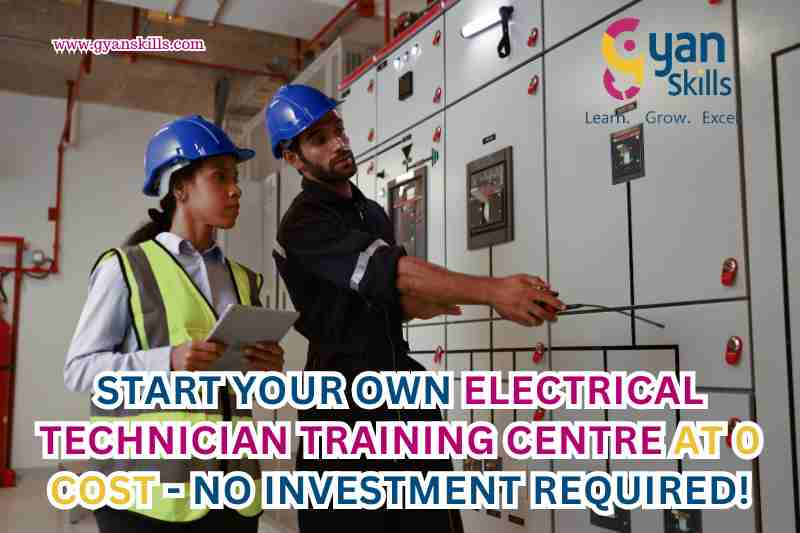
START YOUR OWN ELECTRICAL TECHNICIAN TRAINING CENTRE AT 0 COST – NO INVESTMENT REQUIRED!
Updated for 2026
Start Your Own Electrical Technician Training Centre in 2026
Want to start an Electrical Technician Training Centre, Electrician Training Institute or Electrical Skill Development Centre? If you have electrical experience, teaching skills or an interest in vocational education, a structured training-centre model can help you build a local skill-development business.
The demand for electrical skills is changing. Students are no longer interested only in basic household wiring. They are increasingly asking about electrical installation, safety, troubleshooting, inverters, batteries, solar systems, electrical appliances, distribution systems and job-ready practical training.
This updated 2026 guide explains how to start an electrical technician training centre, what courses you can offer, what students actually want to learn, what infrastructure is required, how practical training should be designed, how certification works and what you should check before choosing a franchise or training partnership.
2026 skill-development update:
The Government of India’s DGT currently lists the Electrician trade under the Craftsmen
Training Scheme as a 2-year, NSQF Level 4 programme for eligible candidates.
The latest curriculum also covers newer areas such as solar panels, batteries, inverters,
smart-grid concepts and electrical transmission/distribution. This is a strong indication
that electrical training is moving beyond traditional wiring towards broader energy and
technology skills.
Interested in Starting an Electrical Training Centre?
Get the latest information about the franchise model, available vocational courses, student registration and centre support.
What Is an Electrical Technician Training Centre?
An Electrical Technician Training Centre is a vocational training institute where students learn practical electrical skills such as wiring, installation, testing, maintenance, troubleshooting and electrical safety.
Depending on the course, students may also learn about electrical circuits, domestic wiring, electrical appliances, motors, batteries, inverters, solar systems and basic electrical distribution.
The most important part is practical learning. Electricity is not a subject that students should learn only from notes. They need supervised practice, proper tools, safe working procedures and opportunities to understand why an electrical system works the way it does.
Why Is Electrical Technician Training Important in 2026?
Electricity is becoming more closely connected with new technologies and changing energy systems. Solar installations, battery storage, inverters, electric equipment and modern distribution systems are creating new areas for technicians to understand.
The Government of India’s latest Electrician curriculum includes practical areas such as solar-panel installation, battery chargers, inverters, domestic wiring, transmission and distribution networks and smart-grid concepts.
That does not mean every short-term electrical course will qualify a student as a government recognised Electrician trade trainee. It does mean that a modern private training centre should consider teaching beyond traditional wiring.
The 2026 opportunity:
Build an electrical training programme around
basic electrical skills + safety + troubleshooting + modern energy technologies +
hands-on practice, while clearly explaining what type of certificate or qualification
the student will actually receive.
What Are Students Really Asking About Electrical Training?
Recent discussions in electrician communities show that beginners are often less interested in memorising theory and more interested in becoming genuinely useful on a job site.
Questions repeatedly revolve around practical experience, apprenticeships, job readiness, hands-on training, solar installation and whether a classroom course alone is enough.
These concerns are important for training-centre owners because they tell you what students want from a modern electrical course.
- Can I become an electrician if I have no previous experience?
- Should I choose an ITI course or a private electrical course?
- How much practical wiring should I learn?
- Can I learn residential electrical work in a short course?
- Will an electrical certificate help me get a job?
- Do I need apprenticeship or work experience after training?
- Can I learn solar installation along with electrical work?
- How do I learn electrical troubleshooting?
- What tools should a beginner electrician know?
- Is online electrical training enough?
- How important is electrical safety?
- Can I start my own electrical service business after training?
Electrical Training Is Becoming More Practical and Technology-Focused
The Government’s latest vocational-training updates show a broader shift towards industry-aligned curricula. DGT says its Craftsmen Training Scheme curriculum is periodically updated in consultation with industry, academia and State/UT governments to incorporate modern tools, equipment and emerging technologies.
The current Electrician curriculum includes areas that go well beyond simple household wiring. Students can encounter solar power systems, battery chargers, inverters, transmission and distribution, relays, circuit breakers and smart-grid concepts.
For a private training centre, this suggests an important strategy: do not build your entire course around yesterday’s electrical work. Teach the fundamentals properly and then introduce relevant modern applications.
What Courses Can an Electrical Technician Training Centre Offer?
| Course | What Students Can Learn |
|---|---|
| Basic Electrical Wiring | Electrical fundamentals, wiring concepts, components, connections and supervised practical work. |
| Domestic Electrical Installation | Basic household electrical systems, circuits, switches, sockets and safe installation practices. |
| Electrical Safety | Electrical hazards, safe working practices, isolation procedures, PPE and risk awareness. |
| Electrical Circuit Fundamentals | Basic electrical theory, circuits, current, voltage, resistance and practical measurements. |
| Electrical Appliances | Basic installation, inspection and maintenance concepts for electrical appliances. |
| Electrical Troubleshooting | Fault identification, testing procedures and systematic troubleshooting under supervision. |
| Inverter & Battery Basics | Basic understanding of batteries, chargers, inverters and their applications. |
| Solar Electrical Basics | Solar-system fundamentals, components, connections and installation concepts. |
| Motor & Control Basics | Introduction to motors, control components and electrical protection concepts. |
| Electrical Technician Skills | A broader programme combining theory, practical work, safety and maintenance concepts. |
Who Should Open an Electrical Technician Training Centre?
- Electricians: Experienced electricians who want to teach their practical knowledge.
- Electrical Engineers: Professionals interested in vocational education and skill development.
- ITI or Vocational Trainers: People with teaching experience in technical subjects.
- Entrepreneurs: Individuals interested in entering the education and vocational-training sector.
- Existing Training-Centre Owners: Computer or skill-development institutes looking to add electrical courses.
- Contractors and Service Professionals: People already working in electrical services who want to create a training vertical.
- Teachers: Educators interested in practical technical education.
Do You Need an Electrical Qualification to Open a Training Centre?
This needs to be answered carefully.
The original franchise draft states that no special qualification is required for the centre owner if they have knowledge of electrical work and safety procedures. However, owning a training centre and personally teaching or performing electrical work are not the same thing.
If you personally teach technical electrical subjects, you should have appropriate knowledge and practical competence for the level you teach. For advanced or regulated work, appropriate qualified trainers and compliance requirements should be considered.
The official DGT Electrician CTS route itself has defined eligibility and a two-year training structure, so a private short-term course should not be advertised as an equivalent replacement unless it actually has the required recognition.
Important:
Never advertise a private training-centre certificate as an “ITI certificate”,
“government electrician licence” or equivalent government qualification unless you
have specific official authorisation to make that claim.
ITI Electrician vs Private Electrical Technician Course
| Government ITI Electrician Route | Private Electrical Technician Course |
|---|---|
| DGT Craftsmen Training Scheme trade. | Private vocational/skill-development programme. |
| Current DGT Electrician trade duration is 2 years. | Duration depends on the private institute and course structure. |
| Defined eligibility requirements. | Eligibility depends on the training provider. |
| NSQF Level 4 according to current DGT listing. | Do not claim an NSQF level unless officially applicable. |
| Formal ITI/CTS pathway. | Can provide supplementary or vocational skill training. |
| Government-defined curriculum and assessment framework. | Curriculum depends on the private provider. |
How to Start Your Own Electrical Technician Training Centre
| Step | What to Do |
|---|---|
| 1. Study Local Demand | Find out whether students, job seekers, electricians, school leavers and existing technicians need electrical training in your area. |
| 2. Choose Your Course Portfolio | Decide whether you will offer basic electrical, domestic wiring, safety, troubleshooting, solar and other practical courses. |
| 3. Decide Your Training Model | Choose between an independent training centre and a franchise/partner model. |
| 4. Verify the Franchise Terms | Confirm current fees, registration charges, certification, centre requirements and partner responsibilities. |
| 5. Choose a Suitable Location | Consider areas close to colleges, ITIs, coaching centres, residential communities and employment hubs. |
| 6. Arrange a Practical Lab | Provide safe workstations, training boards, tools, measuring instruments and appropriate electrical equipment. |
| 7. Appoint Capable Trainers | Use instructors who can demonstrate electrical concepts and supervise practical work safely. |
| 8. Create Practical Batches | Keep batch sizes manageable so students receive enough hands-on practice. |
| 9. Assess Students | Use practical assignments, written tests, demonstrations and supervised assessments. |
| 10. Market Locally | Use Google Business Profile, local SEO, WhatsApp, social media, referrals and community outreach. |
Want to Start an Electrical Training Centre?
Talk to the partner team about the current vocational course portfolio, centre requirements and franchise process.
What Infrastructure Does an Electrical Training Centre Need?
Electrical training should be treated as practical technical education, not simply a classroom subject. Students need an environment where they can safely practise under trainer supervision.
Basic Infrastructure Checklist
- Electrical training boards
- Wiring practice panels
- Switches and sockets for supervised training
- Basic electrical components
- Digital multimeters and appropriate measuring instruments
- Insulated hand tools suitable for training
- Safety equipment and PPE
- Workbenches
- Electrical diagrams and training charts
- Basic appliance-training equipment where appropriate
- Solar training components if solar is part of the curriculum
- Inverter and battery demonstration equipment where appropriate
- Fire-safety equipment
- First-aid facilities
- Good lighting and ventilation
Safety comes first:
Electrical practical training should be carried out under competent supervision using
appropriate training equipment and safety procedures. Students should never be encouraged
to experiment with live electrical systems without proper supervision, isolation and
protective measures.
How Many Students Should Be in One Electrical Training Batch?
There is no single number that applies to every private training centre. The right batch size depends on the number of trainers, practical stations, equipment and the type of work being taught.
The most important question is not “How many students can I fit in the room?” It is “How many students can I supervise safely while giving each person enough practical time?”
Smaller practical batches can often produce better learning outcomes than large groups where students spend most of the session watching.
How Long Does an Electrical Technician Course Take?
The original franchise material states that its Electrical Technician courses generally range between 3 and 6 months, depending on course complexity and depth.
That should not be confused with the official DGT Electrician CTS programme, which is currently listed as a two-year trade.
Course duration should therefore always be presented honestly. A three-month private skill course can be useful for focused training, but it should not be marketed as if it automatically replaces a formal two-year government trade qualification.
Can Beginners Learn Electrical Work?
Yes, beginners can start learning electrical fundamentals, but electrical work is not a skill where students should rush into independent field work.
A sensible beginner programme should start with:
- Electrical safety fundamentals
- Basic electrical concepts
- Identification of components
- Understanding simple circuits
- Reading basic diagrams
- Using appropriate testing instruments
- Supervised wiring practice
- Fault identification
- Basic maintenance concepts
- Progressive practical assessments
Why Practical Electrical Training Matters
One recurring theme in electrician communities is the gap between knowing theory and being comfortable with real work.
A student may be able to answer questions about voltage and current but still struggle when asked to identify a component, read a wiring diagram or troubleshoot a fault.
That is why your training centre should combine:
- Theory — understand the concept.
- Demonstration — see how the task is performed.
- Practice — perform the task under supervision.
- Assessment — demonstrate that the skill has been understood.
- Feedback — identify and correct mistakes.
Should Electrical Students Learn Solar Installation?
Solar is an important modern addition to electrical education.
The current DGT Electrician curriculum itself includes solar-panel installation, solar-power-system layouts and solar-related electrical generation concepts.
A private training centre can therefore consider a dedicated introductory module covering solar-system components, electrical connections, safety and basic installation concepts.
However, the depth of training should match the course duration and trainer expertise. Do not promise professional-level solar installation competence after a few classroom sessions.
Should Students Learn Inverters and Batteries?
Yes, where the centre has suitable trainers and safe demonstration equipment.
The current DGT Electrician curriculum includes battery chargers and inverter-related practical work, including inverter connection in domestic wiring.
This makes inverter and battery fundamentals a useful modern topic for an electrical technician programme.
What Tools Should an Electrical Technician Learn to Use?
Students should become familiar with appropriate tools and measuring equipment as part of supervised practical training.
Depending on the course level, this can include:
- Insulated screwdrivers
- Pliers and cutters
- Wire strippers
- Measuring tape
- Appropriate test instruments
- Digital multimeter
- Electrical testers where appropriate
- Crimping tools
- Basic cable-management tools
- Personal protective equipment
The exact equipment should be selected by the technical trainer based on the curriculum, safety requirements and type of practical work.
Can an Electrical Technician Course Lead to Self-Employment?
Electrical skills can support several forms of employment and entrepreneurship, depending on a person’s qualification, practical competence and local legal requirements.
Possible pathways can include:
- Electrical helper or technician roles
- Maintenance work
- Residential electrical services
- Electrical installation support
- Appliance installation and service
- Solar installation support
- Inverter and battery service
- Electrical contracting pathways
- Technical service businesses
Students should understand that the right to perform regulated electrical work can depend on applicable state rules, licences, registrations and employer requirements.
Can an Electrical Training Certificate Guarantee a Job?
No.
A certificate documents training, but employment depends on actual skills, experience, qualification requirements, employer expectations and the local job market.
This is why a good training centre should focus on practical competence rather than promising guaranteed employment.
What Is the Difference Between a Certificate and a Government Qualification?
This is one of the most important questions students should ask.
A certificate issued by a private training provider confirms completion of that provider’s programme. A government-recognised qualification follows a specific recognition and assessment framework.
For example, the DGT’s Electrician CTS trade has defined eligibility, duration and NSQF classification.
Therefore, your website should clearly state the name of the issuing organisation and the nature of the certificate rather than using broad phrases such as “government-approved” unless you can substantiate that claim.
Electrical Technician Training Centre Franchise: What Can a Franchise Provide?
A franchise or education-partner model can reduce the amount of infrastructure and administrative work required to build a training brand from scratch.
The current Gyan Skills franchise information promotes:
- Zero franchise-fee model
- Large course portfolio
- Vocational and skill-development courses
- Online verification facilities
- Partner support
- Marketing guidance
- Technical and operational assistance
The broader platform currently advertises more than 300 courses across IT, vocational training, beauty, fitness, AutoCAD and other skill categories.
The exact electrical courses available under the current partner system should be confirmed directly before you advertise them locally.
Does “Zero Investment” Mean There Are No Costs?
Important clarification:
A “₹0 franchise fee” or “zero-investment franchise” should not automatically be interpreted
as “a physical training centre costs nothing to operate.”
You may still need to budget for:
- Premises or rent
- Electrical training equipment
- Tools
- Safety equipment
- Furniture
- Electricity
- Internet
- Trainer salaries or payments
- Maintenance
- Local advertising
- Student materials
Gyan Skills currently promotes a zero-franchise-fee model, but prospective partners should confirm the latest terms, student registration charges and revenue-sharing arrangements directly with the organisation before joining.
How to Market an Electrical Training Centre in 2026
1. Target Local SEO Searches
Create useful local pages around searches such as:
- Electrical training institute near me
- Electrician course in [city]
- Electrical technician course in [city]
- Electrician training centre in [city]
- Electrical wiring course in [city]
- Solar installation course in [city]
- Electrical technician training near me
- Electrician classes in [city]
- Vocational electrical training in [city]
2. Show Your Practical Lab
Students want to know whether they will actually practise. Show photographs and videos of training boards, supervised practical sessions, tools and completed student assignments.
3. Explain Safety Clearly
Electrical training involves real hazards. A centre that takes safety seriously can build more trust than one that only advertises “job guarantee” or “high salary.”
4. Create Beginner-Friendly Content
Publish articles and short videos answering questions such as:
- How to start learning electrical work
- What is the difference between electrician and electrical technician?
- What is domestic wiring?
- How does an inverter work?
- What should beginners learn before solar installation?
- What tools does an electrician use?
- How important is electrical safety?
5. Partner With Local Businesses
Local electricians, electrical contractors, solar installers, maintenance companies and appliance-service businesses can potentially become valuable sources of industry exposure and employment connections.
Start Your Electrical Training Centre
Speak with the partner team about the current 2026 franchise model, course availability and centre requirements.
Frequently Asked Questions About Electrical Technician Training
1. What is an Electrical Technician Training Centre?
It is a vocational training centre where students learn electrical fundamentals, wiring, installation, maintenance, troubleshooting and electrical safety through theory and practical training.
2. Is electrical technician training useful in 2026?
Yes. Electrical skills remain relevant across construction, maintenance, appliances, energy systems and other technical sectors. Modern training is also expanding into areas such as solar, batteries, inverters and smart-grid concepts.
3. Can beginners join an electrical technician course?
Yes. Beginners can start with electrical safety, components, basic circuits, measurements and supervised practical exercises before moving to more advanced topics.
4. Do I need an electrical background to learn electrical work?
Not necessarily for a beginner course. However, electrical work requires proper training and safety awareness. Students should not attempt hazardous electrical work independently.
5. What is taught in an electrical technician course?
Depending on the programme, students can learn basic wiring, circuits, appliance installation, electrical safety, testing, maintenance, troubleshooting and modern topics such as solar, batteries and inverters.
6. How long does an electrical technician course take?
The original franchise material states that its Electrical Technician courses generally range from 3 to 6 months. This is different from the official DGT Electrician CTS trade, which is currently listed as a two-year programme.
7. What is the duration of the government ITI Electrician course?
The current DGT listing shows the Electrician CTS trade as a two-year, 2400-hour programme.
8. What is the eligibility for the DGT Electrician trade?
The current DGT listing states that candidates should have passed Class 10 with Science and Mathematics, or an equivalent vocational subject in the same sector.
9. What is the NSQF level of the DGT Electrician trade?
The current DGT listing identifies the Electrician CTS trade as NSQF Level 4.
10. Is a private electrical course the same as ITI Electrician?
No. A private electrical course and the formal DGT Electrician CTS trade are different training pathways. A private course should not be marketed as equivalent to ITI unless the relevant recognition actually applies.
11. Can I learn electrical wiring in a short course?
You can learn basic wiring concepts and supervised practical skills through a short course, but the amount of competence you develop depends on the curriculum, trainer, practice time and assessment.
12. Is practical training important for electricians?
Yes. Electrical work involves tools, components, measurements, diagrams, troubleshooting and safety procedures that are difficult to master through theory alone.
13. Can I learn electrical work completely online?
Online learning can help with theory, diagrams and concepts, but it cannot fully replace supervised practical training for hands-on electrical skills.
14. Can an electrical technician course include solar training?
Yes. Solar electrical fundamentals can be included, and the current DGT Electrician curriculum itself includes solar-related practical and theoretical topics.
15. Can I learn inverter and battery installation?
A suitable course can introduce battery chargers, inverters and their applications. The current DGT Electrician curriculum includes practical inverter and battery-related work.
16. What is taught in electrical safety training?
Safety training can cover electrical hazards, safe work practices, isolation procedures, protective equipment, testing procedures, emergency response and risk awareness.
17. What tools should an electrical student learn?
Depending on the course, students can learn the safe use of insulated hand tools, wire strippers, pliers, screwdrivers, measuring instruments, multimeters and other appropriate training equipment.
18. Can electrical training help me start my own business?
Electrical skills can support self-employment and service businesses, but the exact legal requirements for performing electrical work vary by location. Students should check applicable licensing and registration requirements.
19. Can I start an electrical training centre without being an engineer?
The original franchise material does not require the centre owner to be an engineer. However, technical teaching should be handled by people with appropriate knowledge and practical competence for the course being offered.
20. Who can start an Electrical Technician Training Centre?
Electricians, electrical professionals, teachers, trainers, entrepreneurs, existing training-centre owners and vocational-education professionals can explore the opportunity.
21. Can an existing computer institute add electrical courses?
Potentially, yes. A broader skill-development franchise model can allow an existing centre to explore additional vocational courses, subject to the applicable partner terms and course availability.
22. What infrastructure is needed for an electrical training centre?
A practical centre generally needs training boards, tools, electrical components, measuring instruments, workstations, safety equipment and suitable demonstration systems. The exact infrastructure depends on the curriculum.
23. How many students should be in an electrical training batch?
There is no universal number. Batch size should be determined by the number of trainers, practical stations, equipment and the level of supervision required for safe practical work.
24. Are Electrical Technician certificates provided?
The original franchise material states that students receive a certificate on completion of the applicable course and describes QR-code verification. Confirm the current certificate format and issuing authority before making specific claims.
25. Can certificates be verified online?
The franchise material states that online and offline verification options are available. The exact verification process should be confirmed with the training provider.
26. Is an electrical certificate enough to get a job?
No. A certificate does not guarantee employment. Practical skills, qualifications, experience, employer requirements and local demand all matter.
27. Is an ITI certificate better than a private electrical certificate?
They serve different purposes. The DGT Electrician CTS route is a formal government vocational qualification with defined duration and eligibility. A private certificate documents completion of the private provider’s programme. Students should choose based on their career objective and the recognition they require.
28. Can electrical students get apprenticeship experience?
Apprenticeship or workplace exposure can be valuable because it allows students to connect classroom knowledge with real working environments. The availability and eligibility depend on the employer and applicable apprenticeship system.
29. Can I learn solar installation after learning basic electrical work?
Yes. Basic electrical knowledge can provide a useful foundation for solar electrical training, although solar installation has its own components, design considerations and safety requirements.
30. Is electrical troubleshooting taught in technician courses?
It can be. Troubleshooting should ideally be taught through structured fault-finding exercises rather than only theoretical explanations.
31. What is the difference between electrician and electrical technician?
The exact job title and responsibilities vary by employer and qualification system. Broadly, electricians often focus heavily on installation, wiring and maintenance, while electrical technician roles can include broader testing, maintenance, equipment and technical-support responsibilities.
32. Can I run an Electrical Training Centre part-time?
The original franchise material states that the centre can be run part-time or full-time, subject to practical scheduling and applicable centre requirements.
33. How are electrical course fees decided?
Fees can depend on course duration, practical equipment, trainer expertise, local demand, materials and the depth of training. The original franchise material states that support can be provided in preparing the fee structure.
34. Is an electrical franchise really zero cost?
Gyan Skills currently promotes a zero-franchise-fee model. However, this should not be understood as meaning that a physical training centre has no operating expenses. Equipment, premises, electricity, trainers, safety equipment and marketing can still cost money.
35. Does Gyan Skills provide vocational training courses?
Yes. Gyan Skills currently promotes vocational and skill-development programmes as part of its broader 300+ course portfolio. The exact electrical course availability should be confirmed before registration.
36. Does Gyan Skills provide online certificate verification?
Yes. Its current franchise information promotes online verification facilities for applicable centre, student and certificate information.
37. Can I use the Gyan Skills brand for my training centre?
The current franchise information describes a partner/franchise model under the Gyan Skills brand. The exact branding rights and promotional terms should be checked in the current partner agreement.
38. Does the franchise provide marketing support?
Current Gyan Skills franchise information promotes marketing guidance, promotional support and partner assistance. Ask the team what is included under the current agreement.
39. Can an electrical training centre teach job-oriented skills?
Yes. A course can be structured around practical skills such as wiring, installation, maintenance, troubleshooting, safety, solar fundamentals and inverter/battery basics. However, avoid guaranteeing employment.
40. How do I apply for an Electrical Technician Training Centre franchise?
You can submit a partner enquiry through the official Gyan Skills partner page and discuss the current course portfolio, centre requirements, certification and commercial terms.
Ready to Start Your Electrical Technician Training Centre?
Build your centre around practical training, safety, modern electrical skills and honest career guidance. Speak with the franchise team to understand the latest 2026 terms.
Final Thoughts: Is an Electrical Technician Training Centre a Good Business Idea in 2026?
Electrical training continues to have a strong practical purpose because electricity, maintenance and technical systems are part of almost every modern workplace and home. But the training market is also becoming more demanding.
Students increasingly want more than a certificate. They want to know whether they will actually learn wiring, troubleshooting, safety, solar, inverters and other practical skills. They also want to understand whether a course will help them enter employment or build their own service business.
That creates an opportunity for a training centre that combines electrical fundamentals + practical work + safety + modern energy skills + career guidance.
If you are an electrician, engineer, trainer, entrepreneur or existing education-centre owner, an Electrical Technician Training Centre may be worth exploring.
Before making a business decision, however, verify the franchise agreement, course recognition, certificate issuer, student-registration process, infrastructure requirements, trainer requirements and all operating expenses.
Have Questions Before Applying?
Speak directly with the partner team about the current franchise and course options.
Useful Official Resources
Disclaimer: Electrical training, licensing, certification, government qualifications, franchise terms and course availability can change. Always verify the latest requirements with the relevant government authority and training provider before enrolling students or making a business decision.
A private electrical training certificate should not be represented as an ITI, DGT, NSQF or government qualification unless the specific programme has the relevant official recognition.
Completion of a training course does not guarantee employment, income, licensing or business success.